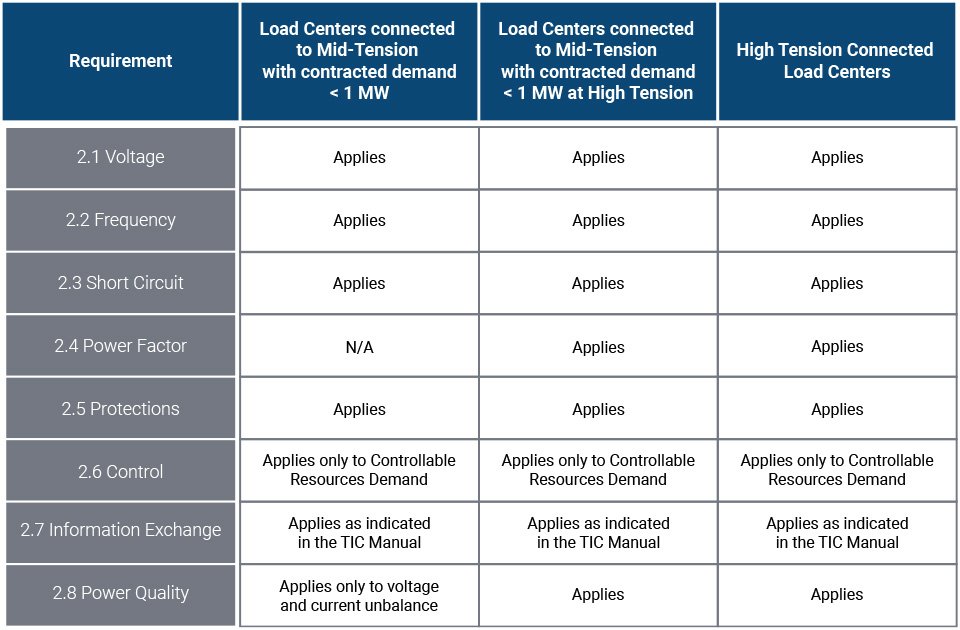
The modern electrical grid is a marvel, a complex tapestry of generation, transmission, and distribution that powers our lives. Yet, as renewable energy sources proliferate and the grid becomes increasingly interconnected, maintaining its stability and reliability transforms into an advanced, intricate challenge. This is where Advanced Topics: Grid Code Compliance and Optimization with PSCAD emerges as not just important, but absolutely critical for anyone operating within this ecosystem.
Grid codes are the regulatory bedrock of this stability, a set of rules dictating how generators, transmission assets, and even large industrial loads must behave when connected to the network. Failing to meet these standards isn't just about financial penalties; it risks widespread blackouts, equipment damage, and a loss of public trust. But compliance isn't a static target; it's a dynamic pursuit of optimal grid performance, and that's where advanced simulation tools like PSCAD become indispensable.
At a Glance: Mastering Grid Code Compliance and Optimization
- Grid codes are the rulebook for grid stability. They define how power system components must interact to prevent failures, especially with the rise of renewables.
- PSCAD is a high-fidelity simulation powerhouse. It's essential for detailed electromagnetic transient (EMT) analysis, which is often required for advanced grid code validation.
- Advanced modeling prevents costly surprises. Dynamic and EMT simulations in PSCAD allow you to foresee and fix potential issues before they impact the real grid.
- Real-time monitoring fuels smarter decisions. Technologies like Phasor Measurement Units (PMUs) and Wide-Area Monitoring Systems (WAMS) provide critical real-time insights.
- Proactive optimization means a more resilient grid. Integrating energy storage and demand response, tested and refined through simulation, helps balance supply and demand.
- The future is smart and secure. Artificial Intelligence, Machine Learning, and robust cybersecurity are becoming central to efficient and reliable grid compliance.
The Evolving Grid and the Imperative of Compliance
The energy landscape is undergoing a profound transformation. Legacy, centralized generation is giving way to a decentralized mix, heavily reliant on renewable sources like wind and solar. While cleaner, these sources introduce new complexities: intermittency, power electronics interfaces, and a different set of dynamic behaviors compared to traditional synchronous generators. This shift doesn't just change what powers the grid; it fundamentally changes how the grid behaves.
Grid codes are the guardians in this scenario. They define the technical requirements for connection and operation, covering everything from voltage and frequency stability, reactive power provision, fault ride-through capabilities, to protection system coordination. Think of them as the operating manual for a giant, interconnected machine. Without adherence, the machine becomes unstable, unreliable, and prone to cascading failures. For operators, manufacturers, and developers, understanding and proactively addressing these codes isn't optional; it's a cornerstone of responsible grid stewardship and critical for obtaining necessary operational permits.
PSCAD: Your Simulation Powerhouse for Grid Codes
When you're dealing with the intricate dynamics of power electronics, fast-acting control systems, and transient phenomena, traditional steady-state or phasor-domain tools often fall short. This is precisely where PSCAD steps in as a critical, high-fidelity electromagnetic transient (EMT) simulation tool. Unlike tools that abstract away the sub-cycle behavior, PSCAD provides a detailed, time-domain simulation environment. It models system behavior at a granular level, capturing the rapid voltage and current changes that occur during faults, switching operations, or the interaction of power converters with the grid.
Why does this level of detail matter for grid code compliance? Many modern grid codes, especially those pertaining to renewable energy integration, demand rigorous testing of fault ride-through capabilities, harmonic emissions, and the dynamic response of power electronic converters during system disturbances. PSCAD's ability to accurately represent these components and their interactions in the time domain makes it uniquely suited for validating compliance against these demanding requirements. It empowers engineers to design, test, and optimize control strategies with confidence, understanding precisely how their system will behave under a vast array of real-world conditions.
Mastering Advanced Modeling and Simulation for Compliance
Navigating the complexities of grid code compliance requires a sophisticated toolkit, and at its heart lies advanced modeling and simulation. This isn't just about running a quick power flow; it's about deeply understanding how your system responds under pressure.
Dynamic Modeling for Long-Term Stability
Dynamic modeling takes you beyond the snapshot of steady-state operation. It's about simulating how power system components—from generators and loads to transmission lines—interact over timescales of seconds to minutes. This is crucial for analyzing phenomena like voltage stability, frequency stability, and rotor angle stability. You're looking for signs of oscillations, uncontrolled voltage dips, or frequency excursions that could lead to system collapse.
PSCAD excels here by allowing the creation of detailed, custom models of generators (including synchronous and asynchronous machines), intricate load characteristics, and sophisticated control systems. This capability lets you test how your proposed connection, like a new wind farm or an industrial load, impacts the overall stability of the grid, ensuring it doesn't introduce destabilizing dynamics or violate grid code limits during various operational scenarios, like sudden load changes or generation trips.
Electromagnetic Transient (EMT) Modeling: The Devil in the Details
If dynamic modeling is about the system's "breathing," EMT modeling is about its "heartbeat" during moments of extreme stress. This technique simulates system behavior at a very high resolution (microseconds), capturing the rapid changes that occur during transient events. Think faults, lightning strikes, switching operations, or the fast-acting responses of power electronics within renewable energy converters.
This level of detail is paramount for modern grid codes, especially concerning renewable energy sources. EMT simulations in PSCAD allow you to:
- Validate Fault Ride-Through (FRT) Capabilities: Can your wind turbine or solar inverter remain connected and provide support during voltage sags or swells, as required by code? PSCAD can precisely model the fault, the converter's response, and the recovery.
- Analyze Harmonic Distortion: Power electronic converters can inject harmonics into the grid. PSCAD helps you model these and verify that your system meets harmonic distortion limits.
- Assess Subsynchronous Resonance (SSR): Critical for series-compensated lines interacting with large renewable energy plants. PSCAD can uncover these potentially destructive oscillations.
- Design and Tune Protection Systems: Accurate transient waveforms are vital for ensuring relays operate correctly and selectively.
By leveraging PSCAD's EMT capabilities, you gain an unparalleled understanding of your system's instantaneous responses, enabling proactive design modifications that ensure robust compliance and prevent costly grid disturbances. You can even model complex control systems in detail to truly test their limits and effectiveness, making it an essential companion for mastering your reactive power capability curves with PSCAD and ensuring your generators provide adequate voltage support.
Phasor Modeling (Contextual Use)
While PSCAD shines in the transient domain, phasor modeling still holds its place for steady-state analysis and initial condition calculations. It's excellent for understanding balanced and unbalanced operating conditions under stable system behavior. Often, engineers use phasor-domain tools like PSSE or DIgSILENT PowerFactory for initial system-wide studies and then delve into PSCAD for specific, high-fidelity transient analysis of critical components identified in the broader study. The key is knowing when to apply each tool for maximum insight. PSCAD can often incorporate phasor-domain equivalents or interface with them to ensure a comprehensive, multi-layered approach to compliance analysis.
Beyond Simulation: Innovative Control and Real-time Monitoring
Simulation provides the predictive power, but real-world grid operations demand dynamic control and constant vigilance. Marrying advanced simulation with innovative control systems and monitoring technologies creates a formidable strategy for sustained grid code compliance and optimization.
Advanced Control Systems for Grid Integration
Modern grid codes increasingly mandate that renewable energy sources don't just connect to the grid, but actively support it. This means developing sophisticated control systems that enable "grid-friendly" operation. Instead of merely injecting power, advanced controls allow renewable plants to:
- Provide Ancillary Services: Offering voltage support, frequency regulation, and even synthetic inertia, mimicking the characteristics of traditional generators.
- Respond to Grid Events: Dynamically adjusting power output or reactive power injection during system disturbances to enhance stability.
- Participate in Market Services: Optimizing their output based on grid needs and market signals.
PSCAD plays a crucial role here, serving as a virtual testbed for these advanced control algorithms. Before deploying expensive hardware, engineers can rigorously design, tune, and validate controller logic within PSCAD, simulating its performance under every conceivable grid condition. This iterative design process significantly de-risks deployment and ensures the controllers meet stringent grid code requirements from day one.
Wide-Area Monitoring Systems (WAMS) and PMUs
You can't manage what you don't measure. Wide-Area Monitoring Systems (WAMS), powered by Phasor Measurement Units (PMUs), are revolutionizing grid observability. PMUs are sophisticated sensors that measure voltage and current phasors at critical locations across the grid, synchronizing these measurements with high precision using GPS time stamps. This gives operators a near real-time, coherent "snapshot" of the power system's state.
With WAMS and PMUs, grid operators can:
- Improve Situational Awareness: Detect oscillations, identify instability precursors, and pinpoint the source of disturbances faster than ever before.
- Enhance Stability Analysis: Validate simulation models against real-world data and fine-tune control strategies.
- Enable Corrective Action: Provide the data needed for operators to intervene proactively to prevent cascading failures.
The integration of these monitoring systems is critical. Simulation tools like PSCAD can help determine optimal PMU placement, allowing you to model various scenarios and assess where monitoring data would be most impactful for detecting and mitigating potential grid code violations.
State Estimation
Building on PMU data and other traditional SCADA measurements, state estimation algorithms process this raw data to produce the most accurate and complete picture of the entire power system's operating state. This estimated state is then used by various grid applications, from security assessment to economic dispatch. For compliance, state estimation confirms if the entire system, under its current operating conditions, is within its prescribed limits, acting as a crucial feedback loop for maintaining a healthy, compliant grid.
Best Practices for Proactive Compliance and Optimization
Achieving and maintaining grid code compliance isn't a one-time checkmark; it's a continuous, evolving process that benefits from strategic best practices and optimization.
Establishing a Robust Compliance Testing Program
The foundation of sustained compliance lies in a well-structured and regularly executed testing plan. You can't just connect your new asset and hope for the best.
- Develop a Comprehensive Testing Plan: This plan should detail all relevant grid code clauses, the specific tests required to validate compliance (e.g., fault ride-through, reactive power capability, harmonic limits), the methodology for each test, and the acceptance criteria. It should span factory acceptance tests (FAT), site acceptance tests (SAT), and ongoing operational compliance checks.
- Conduct Regular Compliance Audits: Grid codes evolve, and so does your system. Regular audits ensure that your assets remain compliant as conditions change and new code revisions are introduced.
- Scenario Planning: Don't just test for nominal conditions. Use advanced simulation to model worst-case scenarios, rare fault conditions, and extreme operational stresses. This proactive approach uncovers vulnerabilities before they become real-world problems.
Leveraging Advanced Tools for Accuracy and Efficiency
The days of manual calculations and simplified models for compliance are largely over.
- Utilize PSCAD for Detailed Analysis: As discussed, for any scenario involving power electronics, fast transients, or precise control system interactions, PSCAD is non-negotiable. Its high-fidelity output provides the evidence needed to satisfy rigorous grid code validations.
- Deploy PMUs and WAMS for Verification: Once a system is operational, PMUs provide invaluable real-time data to verify that the system is indeed performing as designed and simulated. This data can also be used to recalibrate and refine your simulation models, creating a powerful feedback loop between prediction and reality.
- Automate Data Collection and Reporting: Streamline the compliance process by automating the collection of measurement data and the generation of compliance reports. This reduces human error and speeds up verification cycles.
Grid Optimization Strategies
Compliance isn't just about meeting minimum thresholds; it's about optimizing grid performance for maximum stability and reliability.
- Integrate Energy Storage Systems: Battery energy storage systems (BESS) are game-changers. They can buffer the intermittency of renewables, provide rapid frequency and voltage support (ancillary services), and defer costly transmission upgrades. PSCAD is instrumental in designing and optimizing the control strategies for these systems to ensure they comply with grid codes while maximizing their benefits.
- Implement Demand Response Programs: Balancing supply and demand in real-time is crucial. Demand response programs incentivize consumers to reduce or shift their energy consumption during peak periods or system emergencies. This flexible demand acts as a virtual power plant, contributing to grid stability and reliability, and ultimately, easing the pressure on compliance for generation assets.
- Continuous Improvement through Iteration: Treat compliance and optimization as an ongoing cycle. Simulate, test, deploy, monitor, learn, and then iterate. Each cycle refines your understanding and improves grid resilience.
The Road Ahead: AI, ML, and Cybersecurity in Grid Compliance
The grid of the future will be smarter, more distributed, and inherently more complex. This evolution brings with it new opportunities and challenges, particularly in the realm of compliance and optimization.
AI/ML for Predictive Compliance
Artificial Intelligence and Machine Learning are poised to revolutionize how we approach grid code compliance. Imagine systems that can:
- Predict Compliance Issues: By analyzing vast datasets from simulations, real-time PMU measurements, and historical grid events, AI/ML algorithms can identify patterns and predict potential compliance violations before they occur.
- Optimize Control Systems in Real-time: ML can enable control systems to adapt and learn, continuously optimizing their performance to maintain grid code adherence under varying operating conditions, far beyond what static control logic can achieve.
- Automate Analysis and Reporting: AI can rapidly sift through complex simulation results or monitoring data, flagging anomalies, generating detailed compliance reports, and even suggesting corrective actions, dramatically improving efficiency.
- Enhanced Fault Detection and Classification: AI algorithms can quickly identify and classify different types of faults, allowing for more precise and rapid responses, crucial for maintaining stability during disturbances.
This shift towards predictive and adaptive compliance will move us from reactive problem-solving to proactive grid management.
The Cybersecurity Imperative
As power systems become more interconnected, digitalized, and reliant on advanced communication technologies, the threat of cyberattacks looms larger than ever. A compromised control system, hacked PMU data stream, or maliciously altered simulation model could have catastrophic consequences for grid stability and compliance.
The future of grid code compliance must integrate robust cybersecurity measures at every level:
- Secure Communication Protocols: Ensuring that data transmitted between PMUs, control centers, and distributed energy resources is encrypted and authenticated.
- Intrusion Detection and Prevention Systems: Monitoring network traffic for suspicious activity and preventing unauthorized access.
- Supply Chain Security: Verifying the integrity of all hardware and software used in grid operations and compliance tools.
- Cyber-Physical Security: Protecting both the digital and physical infrastructure from attacks that could disrupt operations or manipulate compliance reporting.
For instance, an attacker manipulating data inputs into a compliance simulation tool like PSCAD could lead to flawed operational decisions, while compromising a renewable energy plant's control system could force it to violate frequency or voltage support codes. Ensuring cybersecurity isn't just an IT problem; it's a fundamental aspect of operational reliability and grid code compliance.
Your Next Steps Towards a Resilient Grid
The journey toward advanced grid code compliance and optimization is continuous, but the rewards are substantial: a more stable, reliable, and resilient power system capable of meeting the demands of a rapidly changing energy future.
Here's how you can take meaningful steps forward:
- Embrace High-Fidelity Simulation: If you're not already, integrate tools like PSCAD deeply into your design, testing, and operational planning workflows. Invest in training your engineers to master its advanced capabilities for EMT and dynamic studies.
- Invest in Smart Monitoring and Control: Explore the deployment of PMUs and WAMS to gain real-time visibility into your grid's health. Simultaneously, push for the development and integration of advanced, adaptive control systems for all new grid connections.
- Stay Ahead of Evolving Grid Codes: Regularly review and understand the latest revisions to national and regional grid codes. Proactively assess how these changes impact your existing assets and future projects.
- Explore AI/ML Pilot Programs: Begin experimenting with AI and ML for predictive analytics, automated reporting, or optimized control strategies in a controlled environment. The insights gained can be transformative.
- Prioritize Cybersecurity: Conduct comprehensive cybersecurity audits of your operational technology (OT) infrastructure. Develop robust incident response plans and ensure your compliance strategies account for potential cyber threats.
The future of the grid hinges on our collective ability to not only comply with the rules but to constantly optimize our systems for peak performance. By leveraging advanced tools, embracing innovative technologies, and fostering a culture of continuous improvement, you're not just meeting standards; you're building the resilient energy infrastructure of tomorrow.