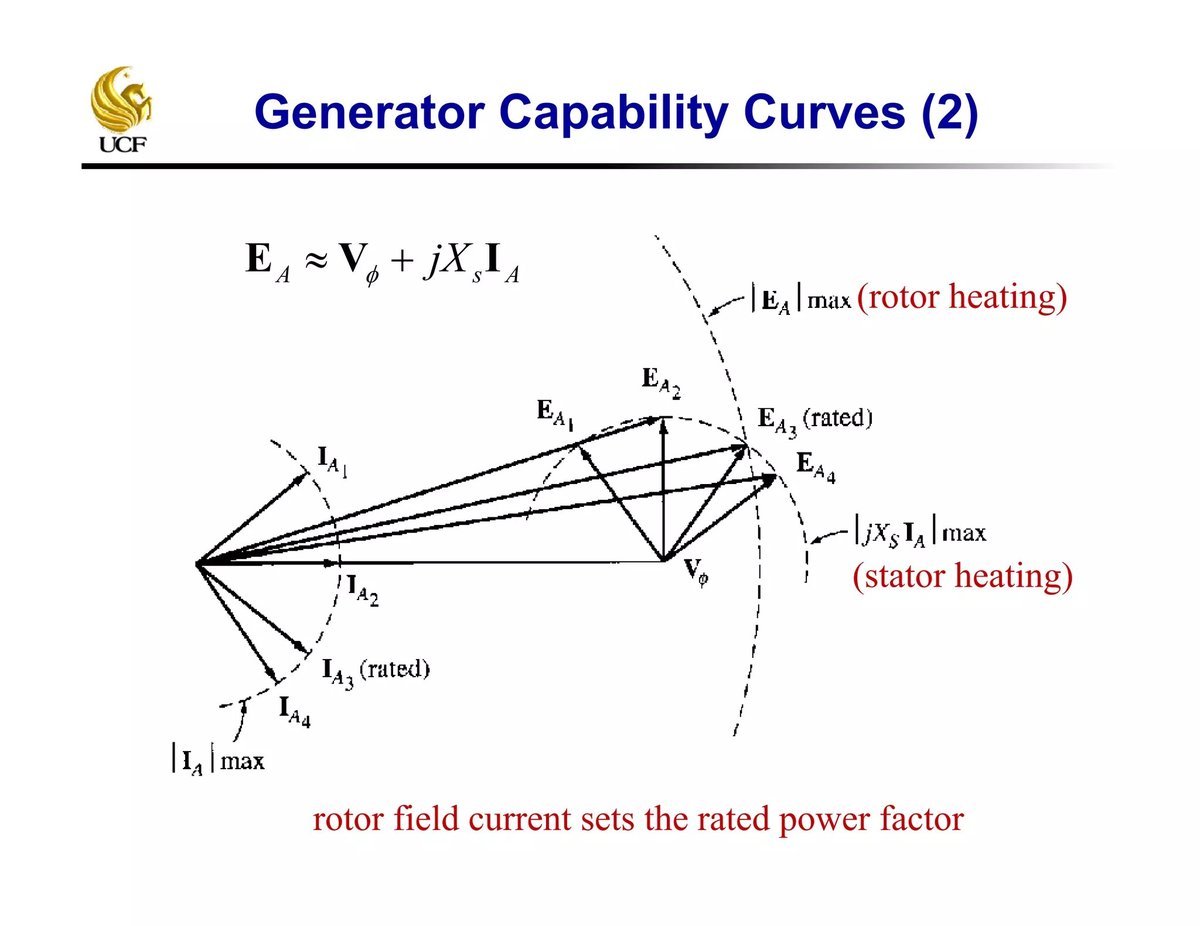
In the complex dance of modern power grids, maintaining stability and reliability isn't just a technical challenge—it's an economic and societal imperative. At the heart of this challenge lies the precise understanding of how synchronous generators can operate without pushing their limits. This is where Interpreting and Applying PSCAD-Generated Capability Curves becomes not just useful, but absolutely critical for engineers and grid operators worldwide. These curves are more than just diagrams; they are the operational blueprints that dictate a generator's safe and sustainable output, ensuring the lights stay on and the system remains robust.
At a Glance: What You'll Learn
- What a generator capability curve represents and its vital role in grid stability.
- How PSCAD simulates and visualizes these crucial operational boundaries.
- Deconstructing the curve: understanding active power (P), reactive power (Q), and the key limiting factors like stator current, field current, and thermal limits.
- Practical applications of PSCAD-generated curves in system design, operation, and protection.
- Common pitfalls to avoid when working with capability curves.
The Unseen Blueprint: Demystifying the Generator Capability Curve
Imagine a high-performance sports car. It has a top speed, maximum acceleration, and a safe operating temperature range. Push it beyond these, and you risk damage or failure. A synchronous generator is much the same. It has a "performance envelope" that defines its safe operating limits, and this envelope is visually represented by its capability curve, often referred to as a P-Q diagram.
This curve illustrates the delicate relationship between a generator's active power (P), measured in megawatts (MW), and reactive power (Q), measured in megavolt-amperes reactive (MVAR). Active power is the "real" power that does work—it runs your appliances, lights your home, and drives industrial machinery. Reactive power, on the other hand, is essential for maintaining voltage levels and system stability. It doesn't do "work" in the traditional sense, but it’s critical for transmitting active power efficiently across the grid.
According to insights from eeediary.com, the capability curve considers several critical factors:
- Thermal limits: Preventing overheating of the generator components.
- Stator current limits: Ensuring the current in the armature windings stays within safe thresholds.
- Field current limits: Managing the excitation system to prevent damage and ensure stable voltage control.
- Stability limits: Crucial for maintaining synchronism with the grid and avoiding conditions that could lead to widespread instability.
These boundaries collectively ensure your generator operates safely, efficiently, and reliably, preventing costly damage and averting potential system blackouts.
Why PSCAD? The Power of Simulation in Defining Operational Limits
Traditionally, generator capability curves might be derived from manufacturer specifications or simplified analytical models. However, modern power systems are dynamic and interconnected, with increasing penetration of renewable energy and complex load profiles. This is where a powerful transient simulation tool like PSCAD (Power Systems Computer Aided Design) steps in.
PSCAD allows engineers to model a generator and its interactions with the surrounding grid in astonishing detail. Instead of relying solely on static data, you can simulate various operating conditions, fault events, and control strategies to truly understand a generator's dynamic capabilities. This predictive analysis is invaluable during the design phase of new plants, when integrating new generators into an existing grid, or when evaluating the impact of system upgrades.
Generating these curves in a simulation environment offers several key advantages:
- Safety: You can test extreme operating points that would be dangerous or impractical to replicate on a live system.
- Accuracy: Detailed models account for complex machine parameters, control systems, and grid impedances that simplified calculations might miss.
- Flexibility: Easily adjust parameters (e.g., cooling system efficiency, transformer tap settings) to see how they impact the capability.
- Design Optimization: Fine-tune generator design and control strategies to maximize its operating envelope without compromising reliability.
The process of generating these curves in PSCAD involves setting up a detailed model of the synchronous machine, its excitation system, and prime mover, then systematically varying active and reactive power outputs while monitoring critical internal parameters. For a deep dive into the practical steps involved, especially concerning reactive power, you might find guidance on how to generate reactive power capability curves using PSCAD. This hands-on process allows you to truly visualize and understand the limits imposed by the physical machine and its control systems.
Deconstructing the PSCAD-Generated Curve: Your Guide to Key Regions and Limits
A PSCAD-generated capability curve typically takes the shape of a kidney bean or a D-shape on a P-Q plane, with active power (P) on the horizontal axis and reactive power (Q) on the vertical axis. Let's break down the critical segments that define this boundary:
1. Stator Current Limit (The Outer Arc)
This is often the outermost boundary of the curve, representing the maximum permissible current through the generator's armature windings. When the stator current exceeds this limit, the windings can overheat, potentially leading to insulation degradation and eventual machine failure.
- Interpretation: Any operating point (P, Q) outside this arc is unsafe. The arc's radius is proportional to the maximum apparent power (S) the generator can continuously supply (S = sqrt(P² + Q²)).
- PSCAD's Role: PSCAD models the thermal characteristics of the stator windings, allowing you to observe simulated winding temperatures and current levels, ensuring your operational strategies stay within these limits.
2. Field Current Limit (The Inner Arcs)
The field winding, located on the rotor, creates the magnetic field necessary for power generation. The field current controls the strength of this magnetic field, directly influencing the generator's reactive power output and terminal voltage. This limit is often represented by two distinct arcs:
- Overexcited Region (Lagging Power Factor / Supplying VARs): The upper portion of the curve, typically above the P-axis. In this mode, the generator is "overexcited," meaning its field current is high, causing it to generate and export reactive power (Q > 0) to the grid. This supports grid voltage. The field current limit here prevents overheating of the field winding due to excessive current.
- Underexcited Region (Leading Power Factor / Absorbing VARs): The lower portion of the curve, typically below the P-axis. Here, the generator is "underexcited," with lower field current, causing it to absorb reactive power (Q < 0) from the grid. This can be necessary to lower excessive grid voltages. The field current limit in this region is often dictated by stability considerations rather than just thermal limits, as very low excitation can lead to loss of synchronism.
- Interpretation: These arcs define the generator's capacity to either supply or absorb reactive power. Exceeding these limits can lead to thermal damage (overexcited) or instability (underexcited).
- PSCAD's Role: PSCAD's detailed excitation system models accurately simulate the relationship between field current, reactive power, and terminal voltage, providing a precise depiction of these critical boundaries.
3. Prime Mover / Thermal Limit (The Vertical Line)
This straight vertical line, usually on the right side of the curve, represents the maximum active power (P) the generator can produce. This limit is imposed by the prime mover (e.g., steam turbine, gas turbine, hydro turbine) driving the generator. It's essentially the maximum mechanical power that can be converted into electrical active power.
- Interpretation: You cannot operate the generator beyond this point, regardless of its reactive power output, as the mechanical input is capped.
- PSCAD's Role: PSCAD allows you to model the prime mover's characteristics, including governor limits and fuel constraints, giving you a realistic understanding of the maximum active power ceiling.
4. End Region / Stability Limit (The Lower Left Arc)
This is often the most critical and complex limit, particularly in the underexcited region. Operating with very low excitation can reduce the synchronizing torque, making the generator susceptible to losing synchronism with the grid (pole slipping). This region defines the point beyond which the generator becomes unstable.
- Interpretation: While you might be thermally safe, crossing this boundary means the generator cannot maintain its synchronous speed with the grid, leading to potential trips and system collapse.
- PSCAD's Role: PSCAD excels in simulating transient stability phenomena. By running various load flow and fault scenarios, you can precisely map out this stability boundary, which is often a dynamic limit influenced by the grid's strength and system conditions.
Beyond the Lines: Interpreting the Curve's Story for Strategic Decisions
A capability curve isn't just a static diagram; it's a narrative of your generator's potential and limitations under various conditions. When you're Interpreting and Applying PSCAD-Generated Capability Curves, you're essentially reading this story to make informed decisions.
- Safe Operating Zone: Any point (P, Q) within the boundary represents a safe and sustainable operating condition.
- Maximum Power Output: The curve tells you the absolute maximum active power (Pmax) and the maximum reactive power (Qmax, Qmin) the generator can continuously supply or absorb.
- Reactive Power Support: It clearly indicates the generator's ability to support grid voltage (overexcited, supplying VARs) or absorb excess VARs (underexcited) to control voltage.
- Bottlenecks and Constraints: By observing which limit defines a particular section of the boundary, you can identify the primary constraint at that operating point. For instance, if you're hitting the stator current limit, you might be limited by the generator's apparent power rating. If you're hitting the field current limit in the overexcited region, the excitation system is working at its maximum.
- Impact of Environmental Factors: While a base PSCAD curve is generated under ideal conditions, you can use the model to explore how factors like ambient temperature, cooling system performance, or even generator age might shrink this envelope. For example, higher ambient temperatures might reduce the thermal limits, effectively shrinking the curve.
- Nameplate vs. Actual Capability: Often, a generator's nameplate data provides nominal ratings. PSCAD simulations can provide a more accurate picture of its actual capability under specific grid configurations and control settings, which might differ from the nameplate.
Applying PSCAD Curves for Real-World Impact: Enhancing System Stability
The true power of PSCAD-generated capability curves comes from their practical application across various stages of power system engineering and operation.
1. System Design and Planning
When designing new power plants or integrating new generators into an existing grid, these curves are fundamental:
- Generator Sizing: Engineers use the curves to ensure the chosen generator can meet expected active and reactive power demands under a wide range of grid conditions.
- Network Integration Studies: Before connecting a new generator, PSCAD simulations with its capability curve help assess its impact on voltage profiles, reactive power flows, and overall grid stability. This is crucial for avoiding unforeseen issues once the generator is online.
- Auxiliary System Design: The reactive power capabilities inform the design of associated reactive power compensation equipment (e.g., shunt capacitors, reactors) that might be needed to complement the generator's output.
2. Operational Optimization and Dispatch
Grid operators rely heavily on capability curves for day-to-day management:
- Optimal Dispatch Decisions: Operators use these curves to make informed decisions about how much active and reactive power each generator should produce to meet demand while staying within safe limits. This ensures efficient resource utilization and prevents equipment stress.
- Voltage Profile Management: The overexcited and underexcited regions of the curve guide operators in using generators to either support voltage in areas of sag or absorb reactive power to mitigate overvoltages.
- Reactive Power Scheduling: Capability curves are integrated into advanced energy management systems (EMS) to plan reactive power schedules that maintain stable grid voltages and minimize transmission losses.
3. Protection and Relaying
Protecting a generator from damage requires accurate relay settings:
- Overcurrent/Overexcitation Relays: The stator and field current limits derived from the capability curve are directly used to set protective relays, ensuring the generator trips offline if current levels become dangerous.
- Loss of Excitation Protection: The underexcited stability limit is critical for setting relays that detect a loss of excitation, preventing the generator from operating in an unstable region and causing grid disturbances.
- Under/Over Voltage Protection: Understanding the generator's reactive power capabilities helps in setting voltage protection schemes that coordinate with the generator's ability to regulate voltage.
4. Fault Analysis and Contingency Planning
In the event of a fault or unexpected outage, capability curves provide crucial insights:
- Post-Fault Operation Assessment: PSCAD allows you to simulate fault conditions and observe where the generator's operating point lands on its capability curve post-fault. This helps assess if it can continue stable operation or if a trip is necessary.
- Contingency Analysis: By simulating the outage of other generators or transmission lines, engineers can predict if the remaining generators can pick up the load and reactive power requirements without exceeding their capability limits. This informs emergency operating procedures.
5. Grid Stability Studies
Capability curves are foundational for complex stability studies:
- Transient Stability: They help determine if a generator can remain synchronous following a major disturbance (e.g., a short circuit). The stability limit on the curve is directly relevant here.
- Voltage Stability: By understanding the reactive power absorption/supply limits, engineers can assess the grid's ability to maintain acceptable voltage levels under varying load conditions and contingencies.
- Small Signal Stability: The interaction of the generator with the grid, as depicted by its P-Q operating points, is crucial for analyzing small signal stability, which relates to the system's ability to damp oscillations.
Common Pitfalls and Misconceptions When Using Capability Curves
Even with advanced tools like PSCAD, misinterpreting or misapplying capability curves can lead to costly errors.
- Treating Theoretical Curves as Absolute: A PSCAD-generated curve is highly accurate for the modeled conditions, but real-world scenarios always have variables. Factors like actual ambient temperature, cooling system degradation, and generator age can subtly shift the actual operating envelope. Always consider a safety margin.
- Ignoring Dynamic Changes: Some limits, especially the stability limit in the underexcited region, are dynamic and can be influenced by the strength of the connected grid (i.e., short-circuit ratio) or the state of the excitation system. A curve generated for one grid configuration might not be entirely valid for another.
- Confusing Short-Term vs. Continuous Limits: A generator might be able to momentarily exceed a continuous thermal limit for a very short duration (e.g., during a fault ride-through). The capability curve typically represents continuous operating limits. Understand the difference and when short-term ratings apply.
- Overlooking Ancillary Services: Modern grids often require generators to provide ancillary services like voltage regulation or frequency response. The capability curve provides the envelope for these services, but the specific control strategies implemented (e.g., automatic voltage regulators) dictate how the generator operates within that envelope.
- Focusing Only on Thermal Limits: While crucial, thermal limits aren't the only concern. Stability limits, particularly in the underexcited region, can be more restrictive and are often harder to intuitively grasp without simulation tools.
Your Action Plan: Leveraging PSCAD for Smarter Grid Operations
Interpreting and Applying PSCAD-Generated Capability Curves isn't a one-time task; it's an ongoing process of understanding, verification, and strategic planning. For power system engineers and grid operators, this means:
- Validate Your Models: Ensure your PSCAD generator models are as accurate as possible, reflecting the actual machine parameters, excitation system, and prime mover characteristics.
- Regularly Re-evaluate: Grid conditions change, equipment ages, and operational philosophies evolve. Periodically re-generate or re-evaluate your capability curves in PSCAD, especially after major system upgrades, new interconnections, or significant operational shifts.
- Integrate with Operations: Work closely with grid operations teams to translate the technical insights from PSCAD curves into practical, actionable operating guidelines. This includes updating dispatch rules, relay settings, and emergency procedures.
- Train Your Team: Ensure all relevant personnel understand what the curves represent, how to interpret them, and the consequences of operating outside the defined limits.
- Embrace Dynamic Analysis: Don't just look at static P-Q diagrams. Use PSCAD's transient simulation capabilities to analyze how your generator navigates its capability curve during dynamic events like faults, load changes, or system disturbances.
By deeply understanding and diligently applying these digital blueprints, you'll not only safeguard expensive equipment but also play a pivotal role in strengthening the backbone of our electrical infrastructure, ensuring a reliable and stable power supply for all.